


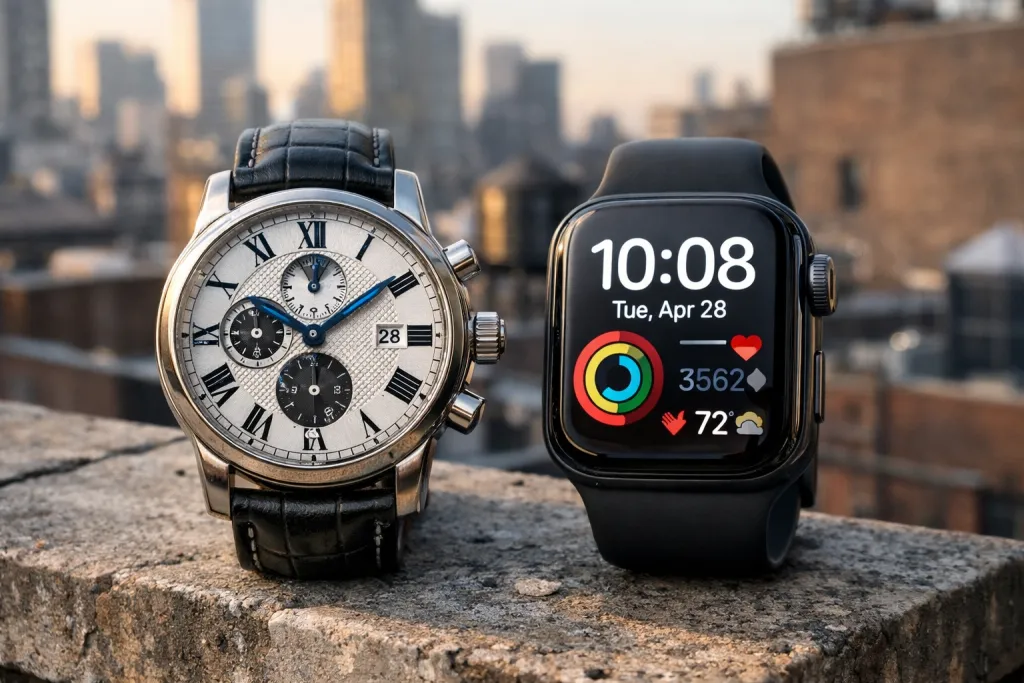
For decades, Alexandre Christie has built a reputation as a brand associated with timeless design, dependable craftsmanship, and accessible luxury. Its collections have appealed to people who appreciate traditional watches not only as timekeeping tools, but also as fashion statements and personal symbols. In a world where trends change rapidly, that kind of consistency has helped classic watch brands maintain their appeal.
Yet the world surrounding traditional horology is changing fast. Artificial Intelligence, smart wearables, and connected technologies are transforming how people interact with everyday objects, including what they wear on their wrists. As smart devices become increasingly integrated into daily life, an interesting question emerges: what role do traditional watches like Alexandre Christie play in the age of AI?
Rather than becoming obsolete, classic watchmaking is entering a new phase. Technology is not necessarily replacing traditional horology; in many ways, it is enhancing and expanding it. The intersection between craftsmanship and innovation is creating new possibilities that are reshaping both the watch industry and the broader wearable market.
How Artificial Intelligence Is Influencing Traditional Watchmaking
When people think about AI, they often imagine robots, software automation, or futuristic gadgets. However, Artificial Intelligence is also influencing industries with long histories, including watchmaking.
In product design, AI-assisted tools are helping engineers experiment with materials, ergonomics, and structural efficiency. Advanced software can simulate stress resistance, test durability, and refine component design before a prototype is even manufactured. This allows brands across the industry to improve product quality while preserving the aesthetics consumers expect from traditional watches.
Even in manufacturing, AI is becoming increasingly important. Machine learning systems can detect microscopic flaws, improve production consistency, and optimize assembly precision. For an industry built on accuracy, these technologies represent a natural extension of craftsmanship rather than a disruption to it.
For consumers, much of this innovation remains invisible. A classic analog watch may still look timeless on the outside, but the processes behind its creation may now involve tools far more advanced than those used only a decade ago.
Traditional Watches and the Rise of Smart Wearables
The growth of smartwatches has led some people to assume traditional watches would lose relevance. Yet the opposite has happened. While smart wearables have created a new category, they have also increased interest in what makes classic watches distinct.
Many people who use smart devices still wear analog watches for reasons that have little to do with technology. Traditional watches offer design, permanence, and emotional value that many digital products struggle to replicate.
At the same time, boundaries between categories are becoming less rigid. The rise of hybrid watches demonstrates this clearly. These watches combine traditional analog styling with discreet smart features such as activity tracking, notifications, and health monitoring.
This trend reflects a broader shift in consumer behavior. People increasingly want products that combine beauty and utility. They do not necessarily want to choose between timeless style and modern convenience.
That creates interesting possibilities for brands rooted in classic aesthetics. The growing overlap between traditional horology and wearable innovation suggests the future may be less about competition and more about convergence.
Why Classic Watches Still Hold Unique Value
Despite rapid advances in wearable technology, traditional watches continue to hold a special place for enthusiasts and everyday consumers alike. Part of that appeal comes from longevity. Smartphones age quickly. Gadgets are replaced constantly. A well-designed watch, by contrast, can remain relevant for decades. That permanence carries emotional weight.
A traditional watch can mark milestones, celebrate achievements, or become something passed from one generation to the next. Even relatively accessible brands like Alexandre Christie benefit from this emotional connection because watches often represent more than utility alone.
There is also the matter of simplicity. In a world increasingly defined by notifications, screens, and digital overload, many people appreciate objects that serve a focused purpose beautifully. A traditional watch does not compete for attention. It complements life rather than interrupting it. That distinction helps explain why many technology enthusiasts still appreciate classic watches, even while embracing AI and emerging tech in other areas of life.
How Smart Technology Is Changing the Watch Buying Experience
Technology is not only transforming how watches are made; it is also changing how people discover and purchase them. Artificial Intelligence increasingly powers personalized shopping experiences. Recommendation engines can suggest watches based on browsing behavior, style preferences, budgets, and even lifestyle habits.
This matters because watch shopping has traditionally involved uncertainty. Buyers often compare multiple styles, wonder how a model will look on the wrist, or struggle to choose among countless options. New technologies help solve these problems. Augmented Reality, for example, allows shoppers to virtually try on watches through smartphones. Someone researching Alexandre Christie models can compare styles digitally before making a purchase.
This creates a more interactive and informed buying process. Meanwhile, AI-driven personalization helps retailers recommend products with greater accuracy, improving both user experience and conversion. These innovations show how even traditional product categories are being reshaped by digital intelligence.
The Growing Role of AI in Wearable Innovation
Beyond traditional watches, Artificial Intelligence is also pushing the wearable category forward. Modern wearables are becoming far more personalized. Devices increasingly learn from users, adapting based on health metrics, routines, and behavior patterns.
This shift matters because it changes how people think about watches and wrist devices generally. A watch is no longer viewed only as an accessory. It may also function as a health companion, productivity tool, or connected interface.
As AI improves, the distinction between accessory and intelligent device may continue narrowing. This does not necessarily threaten traditional watch brands. In some cases, it may inspire new forms of product innovation, from hybrid models to collaborations between heritage design and smart technology. The watch industry has always evolved alongside technological change, from mechanical movements to quartz revolutions. AI may simply be the next chapter in that story.
Sustainability and Innovation in Modern Horology
Another area where technology is influencing traditional watchmaking is sustainability. Consumers increasingly care about responsible production, material sourcing, and environmental impact. AI helps companies address these concerns by improving forecasting, reducing waste, and optimizing supply chains.
Smarter production means fewer excess materials, lower overproduction risk, and more efficient logistics. These may not be the first things people associate with traditional watches, but they are becoming increasingly relevant. Innovation today is not only about adding features. It is also about building products more intelligently. That applies to tech gadgets as much as it does to classic timepieces.
Why Alexandre Christie Still Matters in a Tech-Driven World
Amid conversations about smartwatches and artificial intelligence, brands like Alexandre Christie remain relevant because they represent something many consumers still value: enduring style.
Technology trends move quickly. Good design tends to last. That is why traditional watches continue to attract attention, even among younger audiences exposed to constant digital innovation. For many people, a classic watch offers balance. It provides something tactile and lasting in a world increasingly dominated by software. That value does not disappear because AI advances. If anything, it may become more meaningful.
At the same time, brands that understand technological shifts will likely be better positioned for the future, whether through digital retail innovation, hybrid product development, or smarter manufacturing. Tradition and innovation do not have to oppose each other. Increasingly, they reinforce each other.
The Future of Watches: Heritage Meets Intelligence
Looking ahead, the future of watches may not be defined by analog versus digital. It may be defined by integration. We are already seeing signs of a market where craftsmanship, smart functionality, personalization, and design coexist.
Luxury-inspired wearables, hybrid watches, AI-assisted manufacturing, and intelligent shopping experiences all point in that direction. For consumers, this creates more choice. For brands, it creates new opportunities.
For enthusiasts, it makes the future of horology more exciting than ever. Classic watches are not disappearing. They are evolving within a broader ecosystem shaped by technology. And that may be the most important shift of all.
Final Thoughts
The rise of Artificial Intelligence is transforming nearly every industry, and watchmaking is no exception. Yet rather than diminishing the relevance of traditional watches, technology is opening new possibilities for how they are designed, experienced, and appreciated.
Alexandre Christie remains a compelling example of why classic timepieces still matter. They offer heritage, style, and permanence at a moment when much of technology feels temporary.
At the same time, the growth of AI, wearables, and smart gadgets shows that the future of watches is expanding far beyond conventional definitions. It is no longer simply about telling time. It is about where craftsmanship and innovation meet. And that is a story worth following.